
😺 Facial Expressions and Reactions
Facial expressions are a cornerstone of visual storytelling. Especially in short-form animated content, the face becomes a canvas for conveying emotion, intention, and character depth. For anthropomorphic characters like our profession-themed cats, subtle shifts in expression can make the difference between a forgettable clip and a viral hit. This guide explores how to effectively use facial expressions and reactions to elevate your content.
🎯 Why Expressions Matter
Humans are hardwired to recognize and interpret facial expressions. A raised eyebrow, a slight smirk, or wide eyes of shock — these cues instantly communicate a character’s emotional state. In short-form content, where every second counts, facial expressions do the heavy lifting of character development.
For animal characters, exaggeration is often key. Because animals don’t naturally express human emotions in familiar ways, we rely on visual cues adapted to the human gaze — eyebrows, eye shape, mouth curves, and ear positions become essential tools.
🎭 Core Expressions to Master
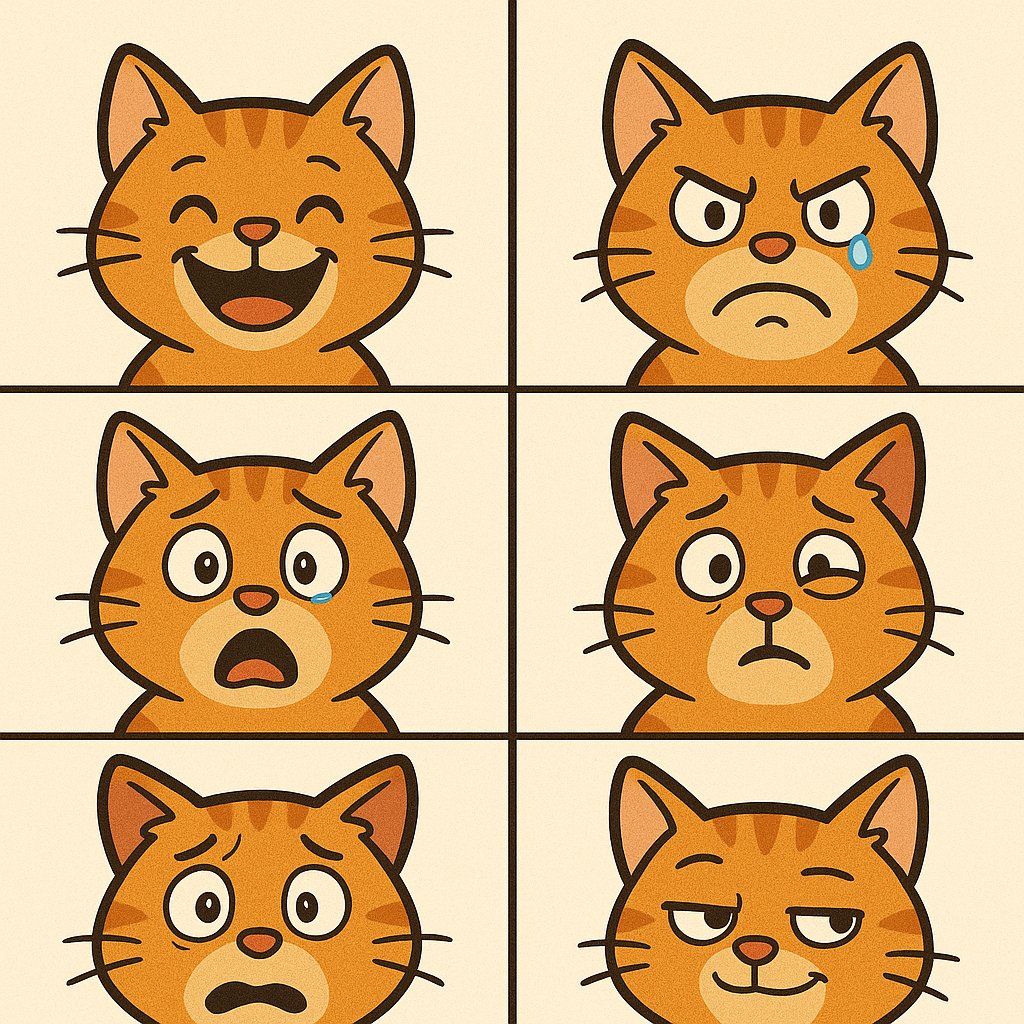
Here are some essential expressions you should incorporate regularly in your animated scenes:
- 😸 Happiness: Rounded eyes, upturned mouth, perked ears
- 😿 Sadness: Drooping ears, downward-curved mouth, watery or glossy eyes
- 😮 Surprise: Wide eyes, open mouth, raised brows
- 😾 Anger: Furrowed brows, bared teeth or sharp mouth line, tense body posture
- 🙀 Fear: Shaking pupils, flattened ears, retracted body
- 🤨 Confusion: One eyebrow raised, tilted head, slightly open mouth
Each of these can be stylized to match your character’s personality and role.
⏱️ Timing and Reactions
A good expression is more than just a frozen face — it’s about timing. A beat of silence before a wide-eyed gasp. A moment of smug satisfaction before breaking into laughter. Reactions tell your audience how to feel, when to laugh, or when to lean in.
👉 Use quick cuts and close-ups to highlight expressions right when they matter most.
In short-form video, you might only have 5–10 seconds to land a joke or emotional beat. Make your character’s face do the talking.
🧩 Character Consistency
Establish facial expression norms for each character. If your firefighter cat always reacts with wide, dramatic eyes and over-the-top smiles, stick with it. If your security cat is more stoic with subtle eyebrow raises and pursed lips, maintain that tone.
✅ Consistency helps build character recognition and enhances comedic timing.
When expressions break from the norm, the emotional contrast becomes a punchline.
🎥 Expression and Framing
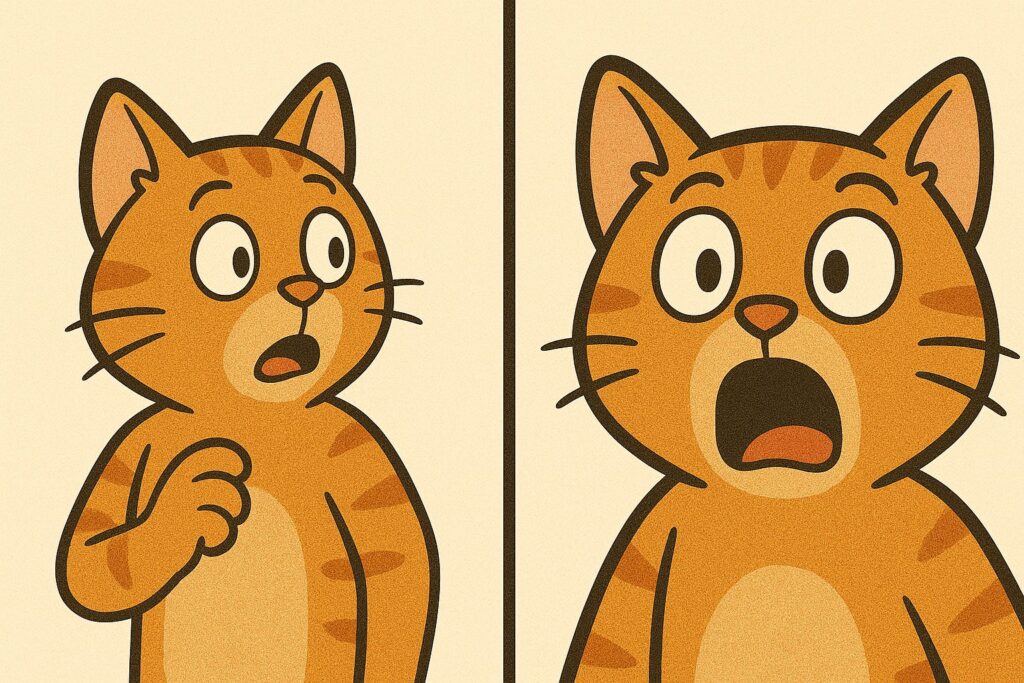
Close-ups are your best friend. Tight framing on a face allows viewers to catch even the smallest twitch of an eyebrow.
- Use mid-shots for context
- Use zoom-in shots when a reaction is key
Also, be mindful of eye direction. Reactions to off-screen action often require your character to look convincingly toward that stimulus. This enhances the illusion of continuity and storytelling depth.
⚠️ Avoid Overuse
Facial expressions are powerful — but like any tool, they can be overused. If every single moment is exaggerated, nothing stands out.
✔️ Balance intensity with subtlety
✔️ A calm stare before a sudden explosion of emotion often has more impact than constant hyperactivity
Sometimes, the absence of a reaction is the funniest choice of all.
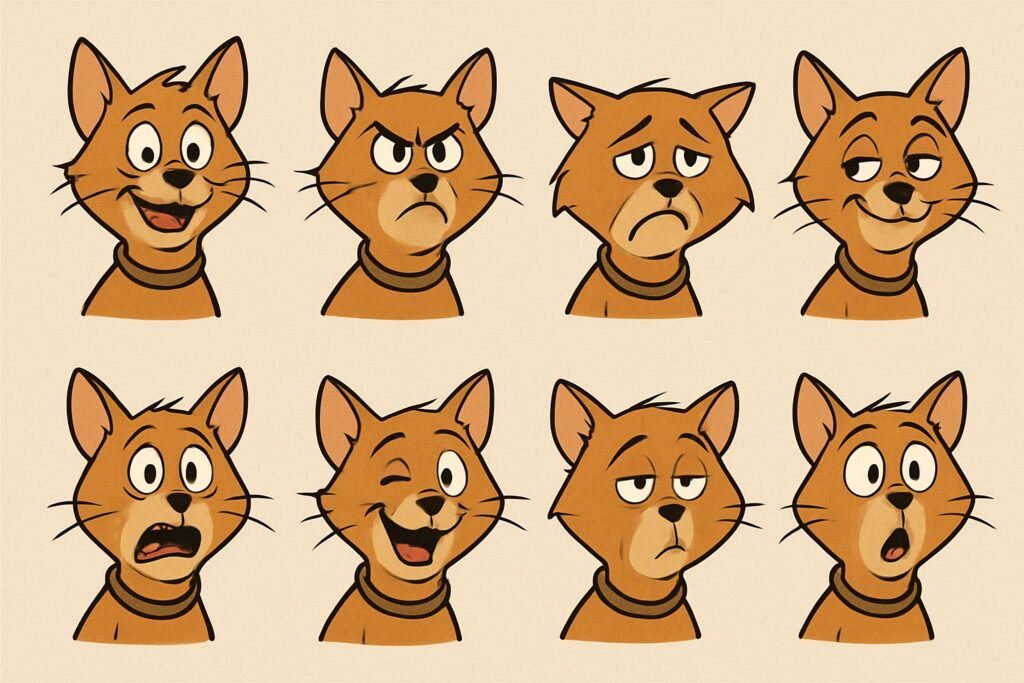
🧪 Practice with Expression Sheets
Build or generate expression sheets for each of your main characters. These are grid-style visuals showing various emotions side-by-side. They help:
- Standardize visual language across scenes
- Make animation and generation more efficient
You can even use these sheets as references when crafting image prompts. It ensures that your expressions remain consistent and expressive.
🐾 Final Thoughts
Facial expressions and reactions are your shortcut to emotional connection. They transcend language and immediately immerse viewers in your story.
In the world of profession-based cat shorts, they’re your biggest emotional weapon.
Whether your firefighter cat is smug after saving the day or horrified by a fish slipping away, their face tells the real story.
🎬 Train your eye, refine your timing, and let your characters emote like pros.
🔗 What’s Next?
Ready to explore how scene composition can shape your narrative structure?
👉 Next: Scene Structure Guide