
🧱 Scene Structure Guide
A well-structured scene is the backbone of effective short-form storytelling. Especially in the world of profession-themed anthropomorphic cat shorts, clear scene progression keeps viewers engaged, sets up punchlines, and maximizes emotional impact. This guide breaks down how to plan, frame, and pace your scenes for maximum engagement.
🎬 Why Scene Structure Matters
Short-form content often has to do the work of a full story in under 30 seconds. That means every scene must have:
- A clear purpose
- Efficient setup and payoff
- Visual and emotional clarity
Scenes that lack structure feel confusing or pointless. Structured scenes make your characters and their actions memorable.
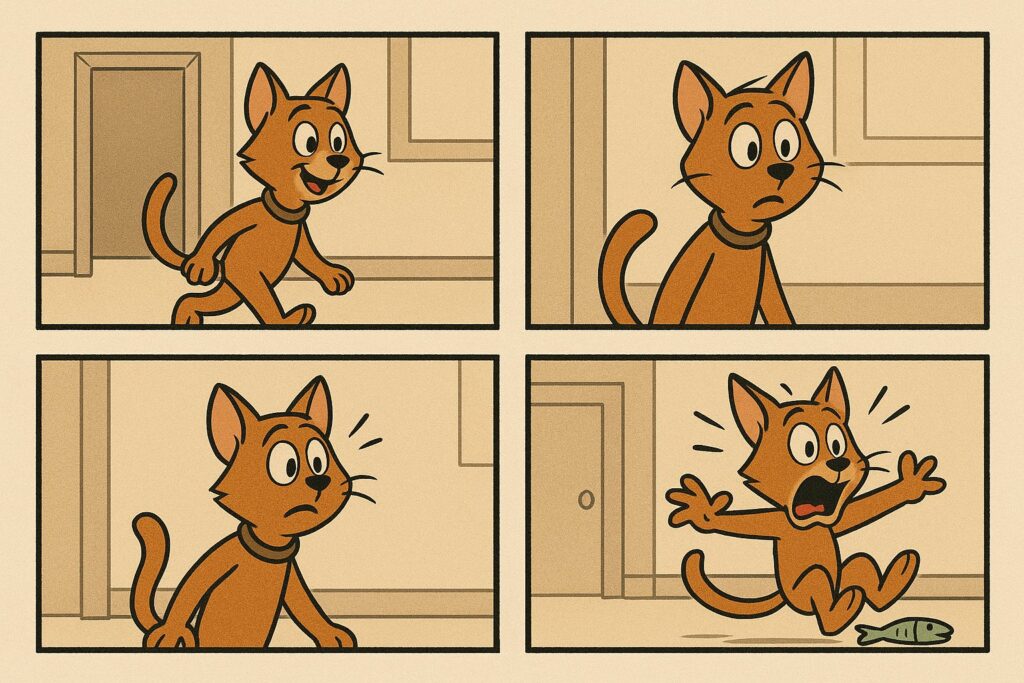
🧩 The Basic Scene Formula
While creativity is key, most viral short-form videos follow a version of this structure:
- Establish the Setting
- Show where the action is happening
- Introduce the main character in context
- Introduce the Conflict or Situation
- What’s unusual, funny, or intriguing?
- Create a setup that leads to anticipation
- Deliver the Twist or Punchline
- A surprising reaction, mishap, or reveal
- Keep it visual and immediate
- End with a Reaction or Resolution
- Character reaction
- Quick comedic button or emotional wrap-up
🕐 Scene Timing Breakdown
Here’s a rough time allocation for a 15-second video:
- 0–3 sec: Establish the setting and character
- 4–7 sec: Present the situation/conflict
- 8–11 sec: Twist or payoff
- 12–15 sec: Reaction and ending
🎯 Keep each scene between 3–5 seconds unless doing a visual gag that needs more time.
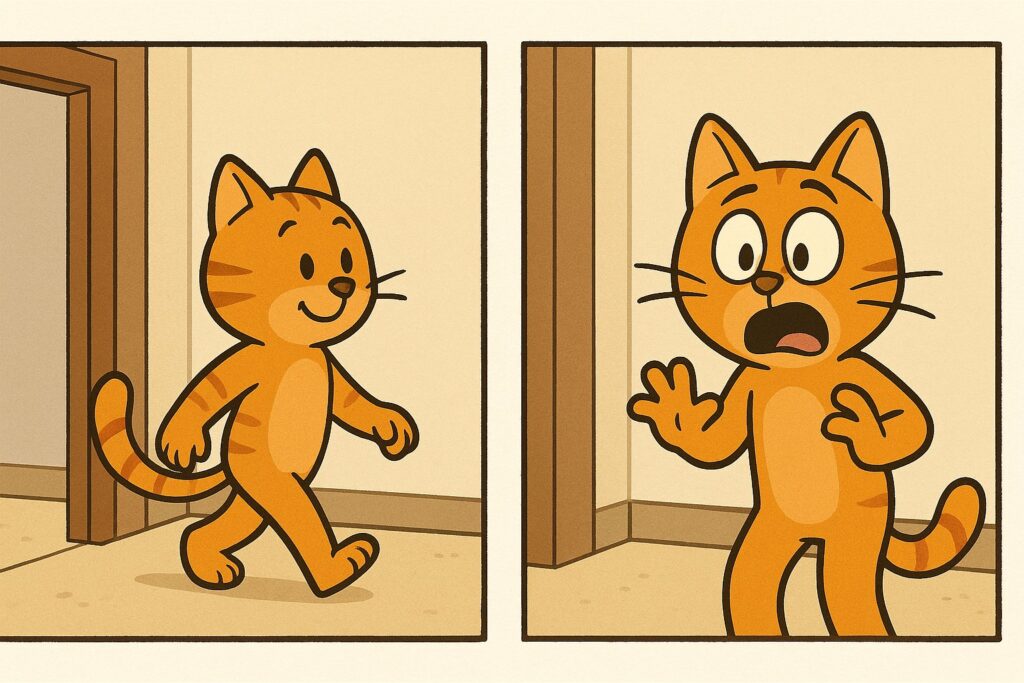
🎥 Scene Transitions and Continuity
Even in short videos, transitions matter. Use:
- Jump cuts to skip time and add punch
- Match cuts to keep motion fluid
- Smash cuts for comedic surprise
Also, ensure visual continuity: character position, lighting, and direction should remain consistent between shots.
🛠️ Planning Scenes in Advance
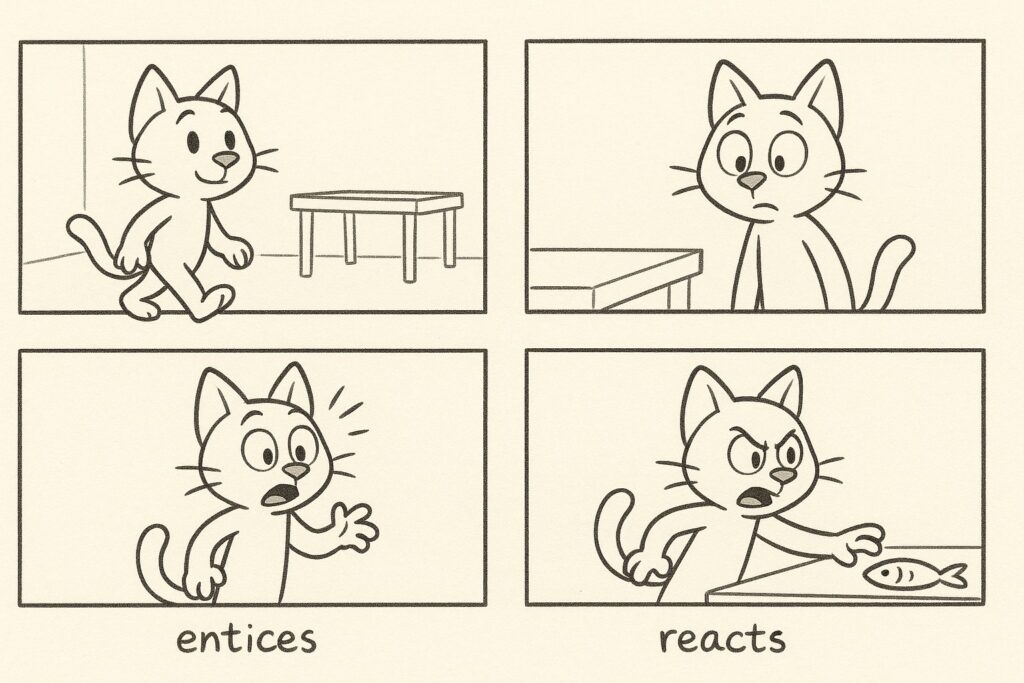
Don’t wing it. Planning your scenes before generation or animation helps:
- Avoid inconsistent backgrounds
- Align facial expressions with action
- Maintain momentum between cuts
Use scene breakdown sheets or bullet outlines to plan 3–6 frames before starting visual creation.
🔄 Loops and Callbacks
Loops work great for TikTok and Shorts. A satisfying loop makes a viewer watch again:
- Use mirrored framing between first and last shots
- Reintroduce a prop or sound at the end
- Create a reaction that leads back to the opening frame
✅ Callbacks also build continuity across your series — referencing earlier videos makes fans feel rewarded.
🐾 Final Thoughts
Strong scenes aren’t about complexity — they’re about clarity, timing, and intention. Whether your chef cat is burning pancakes or your barista cat serves coffee to a dog, make sure the scene delivers a story beat.
🎬 Plan every scene like a mini-story with a beginning, middle, and end. Your audience (and the algorithm) will thank you.
🔗 What’s Next?
Ready to take your visuals further with better shot composition?
👉 Next: Camera Work and Composition