
🖼️ Background Consistency Techniques
In short-form storytelling with anthropomorphic characters, it’s not just the stars that matter — the background plays a critical role in visual coherence. Inconsistent settings confuse viewers and weaken immersion. This guide shows you how to keep your backgrounds logical, consistent, and engaging, even across multiple shots or scenes.
🧩 Why Background Consistency Matters
- Keeps viewers anchored in the story world
- Reduces visual noise and distraction
- Boosts comedic timing (e.g. recurring background gags)
Even in AI-generated or mixed-media content, smart background strategy enhances storytelling flow.
🎨 Use a Limited Environment Palette
Don’t reinvent the setting every shot. Instead, define 2–3 main background types:
- Street corner with visible signage
- Café interior with consistent tables, lighting, and posters
- Park bench with recurring plants or distant skyline
These become “visual anchors” for recurring settings.

🗺️ Reuse Layout Elements Strategically
When changing the camera angle, keep elements (windows, signs, furniture) in logical places. This builds trust with your audience.
Tip: Sketch or reference a top-down layout of key locations. It helps you keep track.
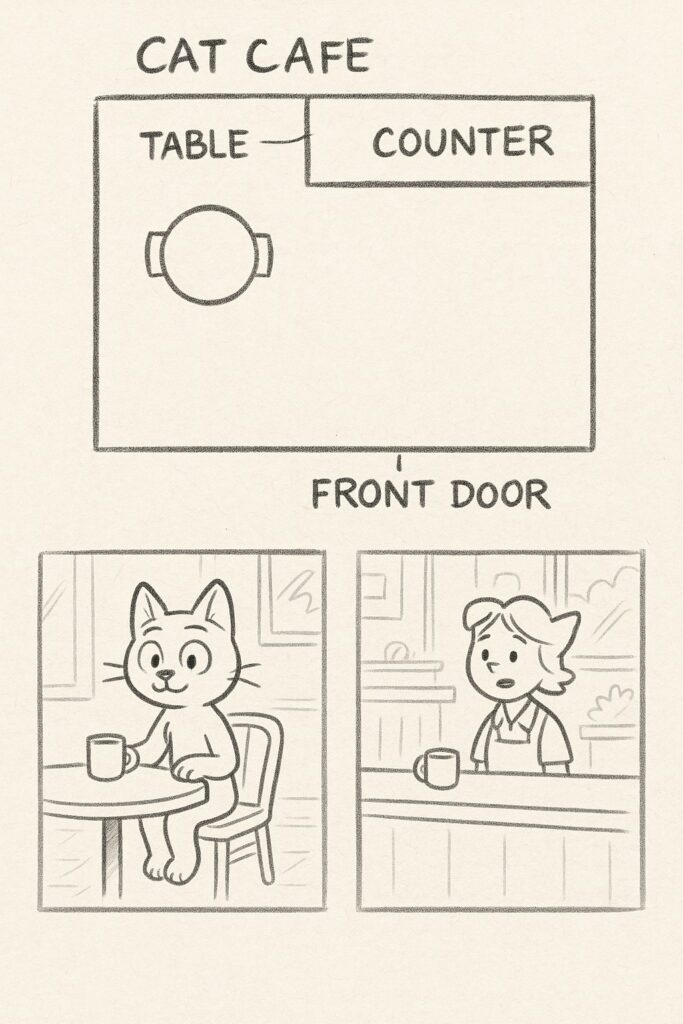
🕵️♂️ Spot the Mistakes Before Viewers Do
Double-check these common errors:
- Missing or suddenly moved furniture between shots
- Lighting direction that flips between frames
- Background items switching position
Continuity breaks can pull viewers out of the experience, even subconsciously.
🐾 Final Thoughts
Your story may follow a heroic cat, but the world around it must also make sense. Background consistency is silent but powerful — it makes your world feel lived-in, intentional, and professional.
Focus on recurring layouts, stable visual cues, and small details. That’s how you build a setting that supports, rather than distracts from, your characters.
🔗 What’s Next?
Want to improve how you write your AI image prompts?
👉 Next: Image Prompt Crafting Tips