
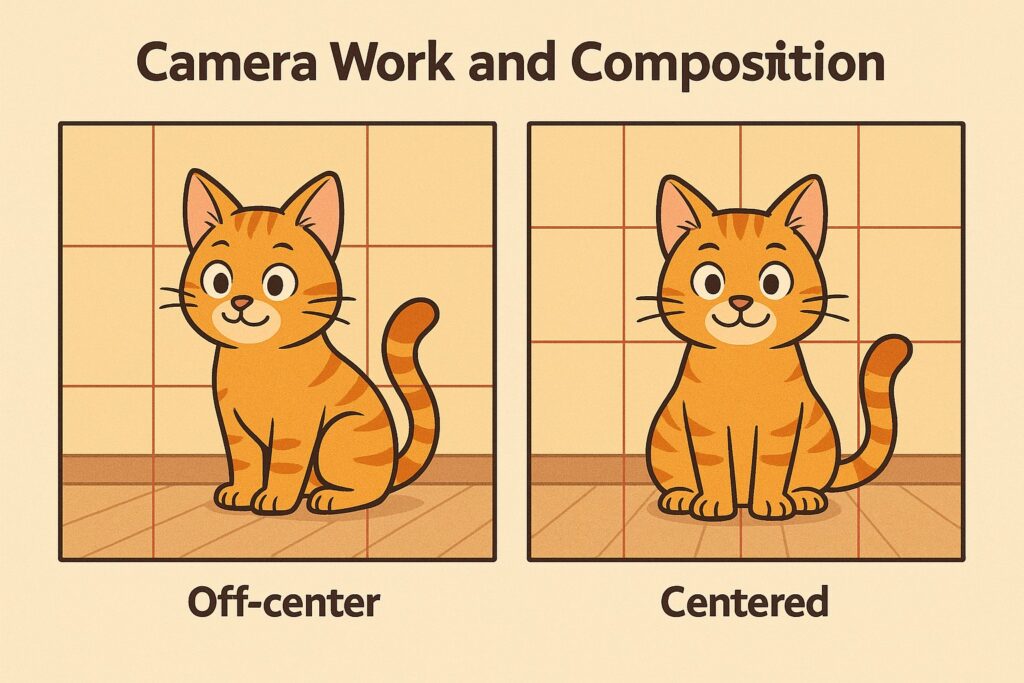
🎥 Camera Work and Composition
Visual storytelling isn’t just about what happens — it’s about how it’s shown. In short-form videos featuring anthropomorphic cats, smart camera work and thoughtful composition can make the difference between a forgettable clip and a viral hit. This guide shows you how to frame and move your shots to enhance emotion, comedy, and clarity.
🧭 Basic Composition Rules for Shorts
Here are tried-and-true composition principles that help every frame pop:
➕ Rule of Thirds
Place your subject off-center for a more dynamic look. Align eyes or key objects with the grid lines.
🔁 Symmetry for Emphasis
Use centered framing when you want the character or moment to feel powerful or iconic.
➖ Use Negative Space
Leave breathing room around your subject to highlight action, reactions, or motion.
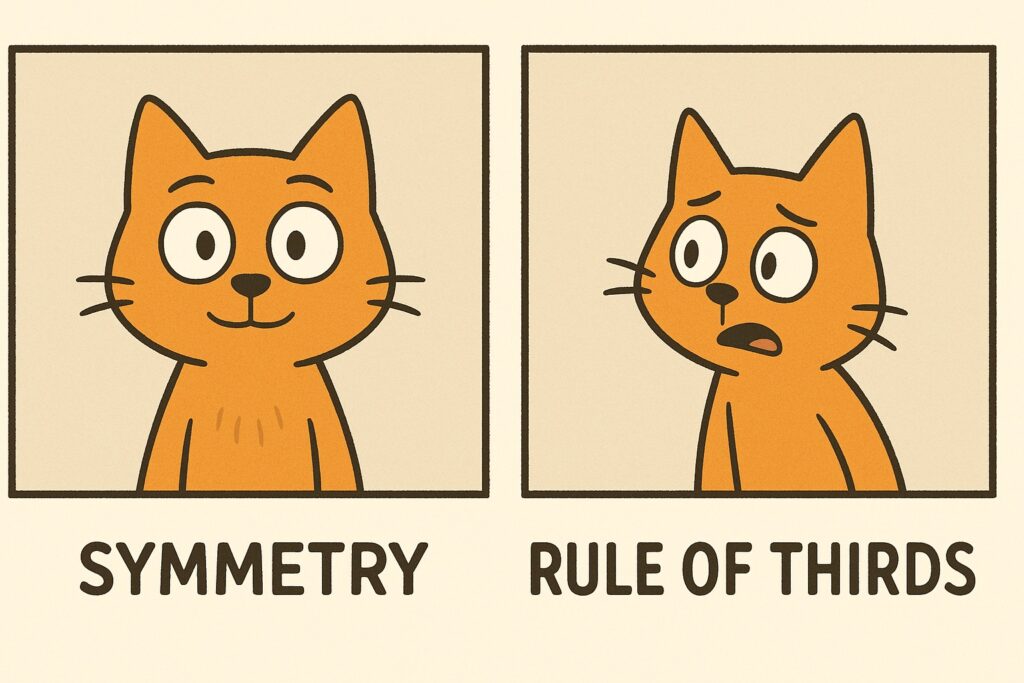
📐 Framing for Character Comedy
Composition can make a gag land — or fall flat. Here’s how:
- Tight close-ups for intense emotion (shock, smug grin, panic)
- Wide shots for situational humor (cat caught mid-air, slipping, or running)
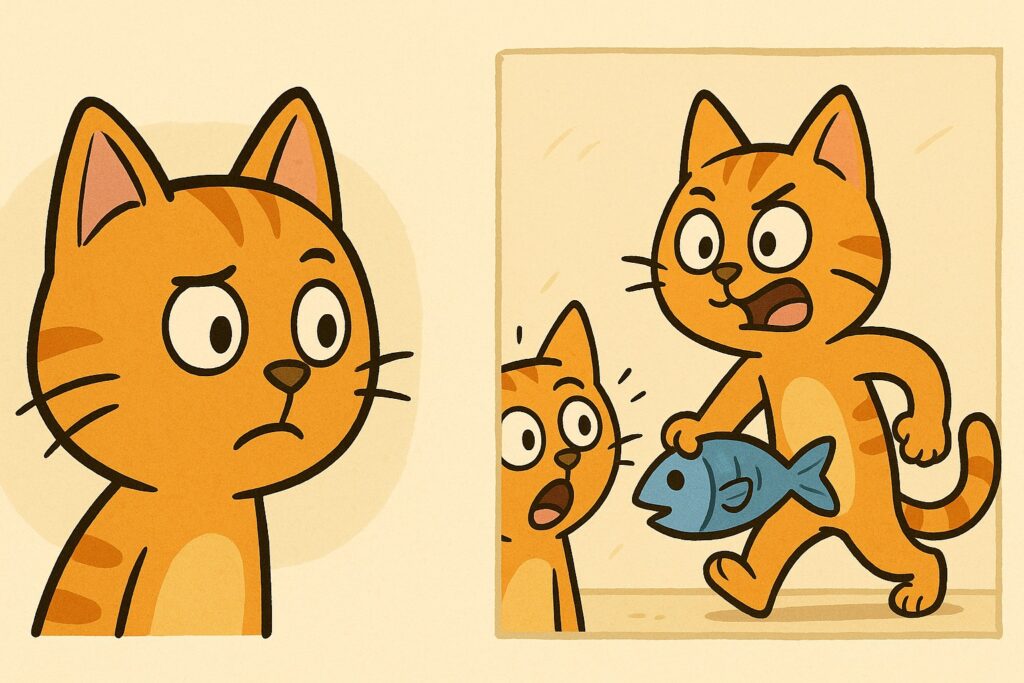
- Over-the-shoulder shots to show what a cat is reacting to
Tip: A sudden zoom-in mid-shot often enhances comedic timing.
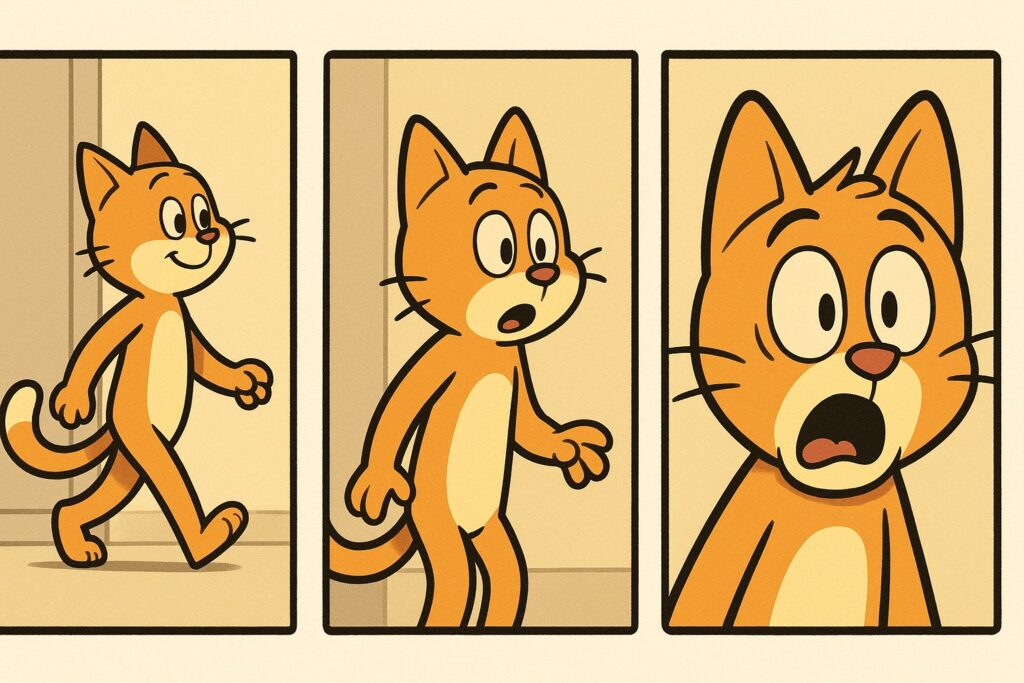
🕹️ Camera Movement Tricks
Even in AI-generated or animated content, implied camera movement adds life:
- Push-ins add drama or tension
- Zoom-outs reveal absurd context
- Quick pans mimic chaotic reactions
These tricks are especially useful in tools like Premiere Pro when zooming on static images.
🔄 Creating Visual Flow Between Shots
Avoid choppy cuts. Use these techniques for smooth transitions:
- Motion matching: Character moves left to right in both shots
- Eyeline match: Character looks left in one shot, we cut to what they’re seeing
- Cut on action: Transition during movement for natural pacing
🧱 Stacking for Vertical Format
On TikTok, YouTube Shorts, and Instagram Reels, vertical video is king. Frame your shots to take advantage of:
- Top-heavy action (jumping, reacting, flying objects)
- Bottom anchoring (props, paws, spilled items)
- Center-weighted characters for visual balance
Keep text or key visual elements away from the bottom UI zone where captions appear.
🐾 Final Thoughts
Your camera and composition choices guide the viewer’s eye. Whether your cat is peeking around a corner or triumphantly raising a fish, how you show it shapes how it feels.
Focus on clarity, contrast, and clever framing — it’s not just art; it’s visual strategy.
🔗 What’s Next?
Want to keep your scenes visually consistent from one frame to the next?
👉 Next: Background Consistency Techniques