
Character Design Tips
How to Create Visually Compelling Cat Characters for Short-Form Video Content
🧩 Introduction
In the world of short-form video content, especially when working with AI-generated animation, the success of your story often hinges on one thing: the clarity and appeal of your character. A well-designed cat character doesn’t just look cute — it tells a story, delivers emotion, and drives engagement. This guide dives deep into the principles of visual character design, with a focus on anthropomorphic cats used in comedic and narrative roles.
Whether you’re producing content for TikTok, YouTube Shorts, or Instagram Reels, these techniques will help your characters stand out — and stick in viewers’ minds.
🎯 Who This Is For
This article is intended for:
- AI video creators using tools like KLINGAI, Runway, or Pika
- YouTubers building animated short series featuring animal characters
- TikTok content creators producing looping comedic skits
- Anyone working with cat-based storytelling, especially in vertical video formats
🧠 Why Character Design Matters
Before diving into the tips, let’s answer an important question: why should you care about character design?
Because in short videos, you don’t have time to explain. Viewers need to instantly know:
- Who this character is
- What emotion they’re feeling
- Whether they’re funny, tough, clumsy, lazy, etc.
Strong visual cues — like fur color, posture, or expression — carry the weight of the story when your runtime is under 30 seconds.
🔟 Ten Expert Tips for Cat Character Design
1. Define a Clear Personality Before Anything Else
Start with a single trait: brave, lazy, serious, silly, arrogant, shy. Everything else should follow. For example, a clumsy cat might have wide eyes and a drooping tail, while a proud cat may stand tall with a tight posture and half-closed eyes.
🪶 Design Tip: Avoid mixing too many traits. In short videos, clarity is better than complexity.
2. Choose Memorable Fur Patterns
Fur pattern is one of the most important character identifiers — even more than clothing.
Use contrast: orange tabby, black & white tuxedo, calico.
Keep consistency: don’t change fur in each scene or video.
💡 SEO Tip: Repeating the same pattern builds visual branding over time — essential for creators building a series.
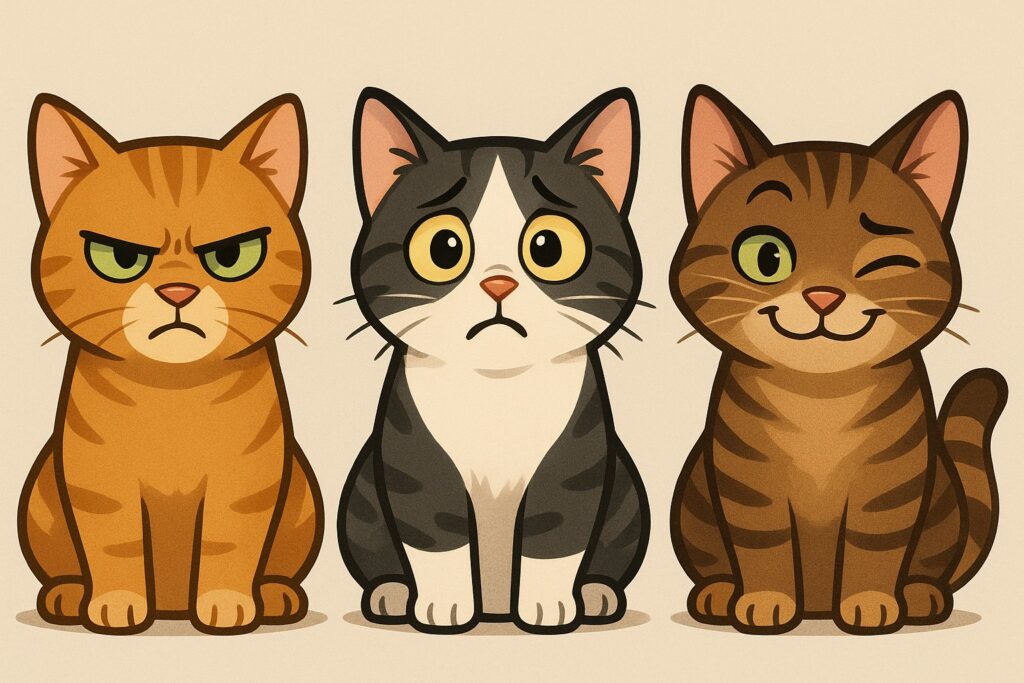
3. Match Body Shape to Role and Personality
- Thin cats = quick, alert, agile (ideal for sneaky roles)
- Chubby cats = comedic, slow-moving (perfect for relaxed or food-based scenes)
- Average build = balanced default
🐾 Tip: Don’t be afraid to exaggerate body shape slightly. Comedy rewards boldness.
4. Use Tail and Ear Position to Communicate Emotion
Ears and tails say more than mouths.
- Tail up = alert or confident
- Tail down = tired or ashamed
- Ears perked = curious
- Ears folded back = scared or angry
🦻 Practical Use: Use these cues when facial expression is minimal (e.g., profile shots).
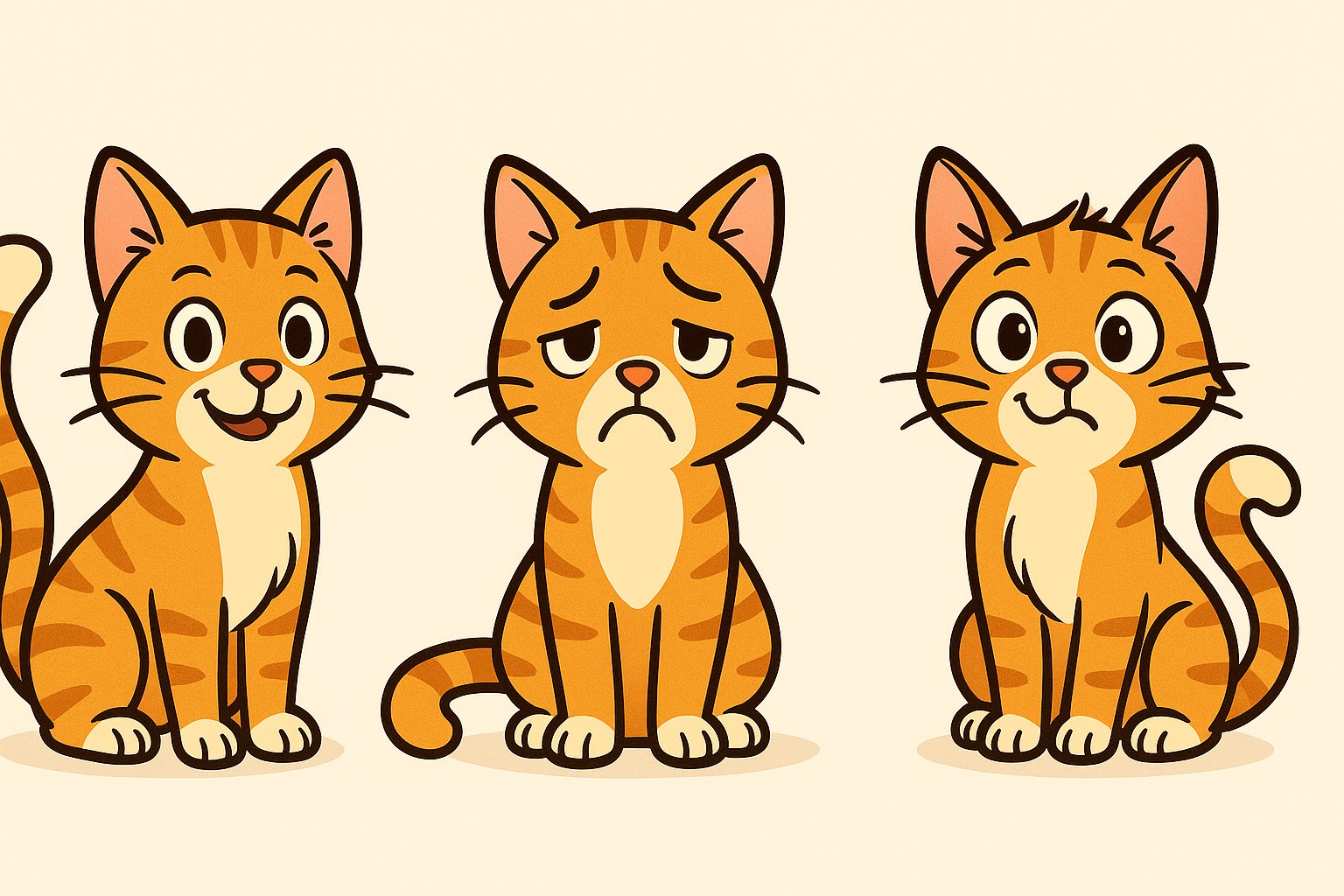
5. Design Recognizable Silhouettes
Your character should be identifiable even in shadow. Try posing your cat in a side profile and checking if the ear shape, body shape, and tail position make it readable.
🎯 Advanced: Use asymmetry for more dynamic silhouettes.
6. Keep the Eyes Expressive
- Large round eyes = innocence, surprise
- Narrow slanted eyes = mischief, sarcasm
- One eye closed or blinking = comedic expression
🔍 Editing Tip: Zooms and punch-ins rely heavily on eye shape for impact.
7. Add Personality-Driven Accessories
If your cat wears something, let it say something.
- Firefighter helmet = brave
- Dirty scarf = traveler
- Oversized glasses = nerdy
Avoid clutter. One or two accessories are enough in short videos.
8. Use Facial Markings Strategically
Spots, scars, or stripes aren’t just decorative — they can imply age, toughness, or backstory. A single scratch across the nose can suggest years of experience (or mischief).
🎨 Style Note: Keep symmetrical designs to avoid animation inconsistencies.
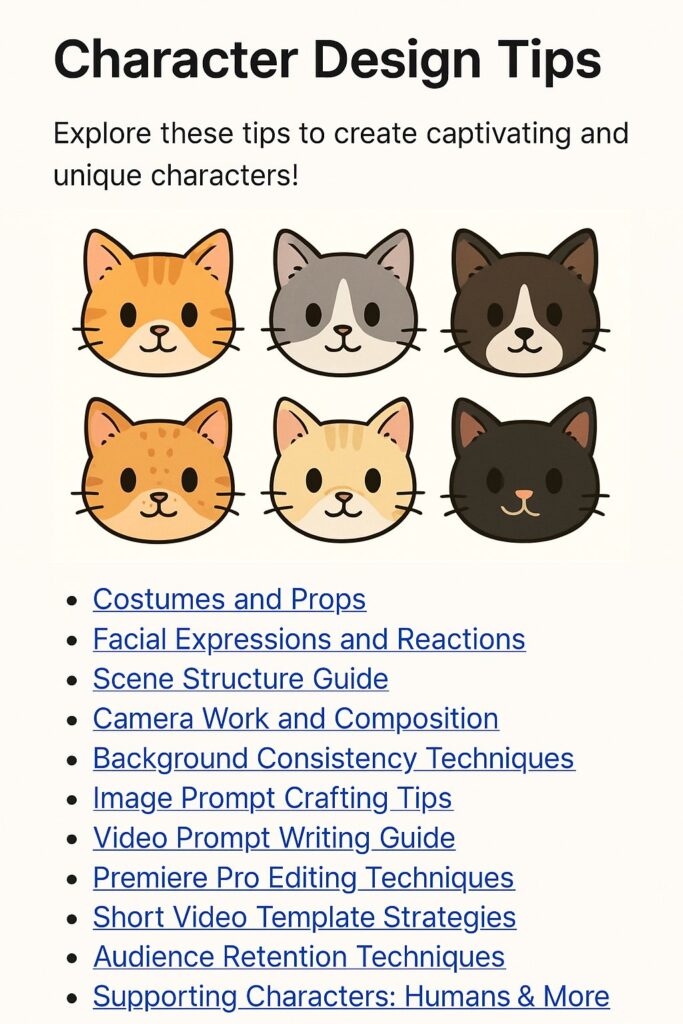
9. Keep Your Design Reusable Across Scenes
You’ll likely reuse the same character in multiple scenes. Don’t over-design the model.
- Avoid complex clothing folds
- Stick to a few consistent poses
- Save variations for specific scenes (e.g., “wet” or “dirty” versions)
10. Balance Realism and Stylization
Too realistic? It might feel uncanny. Too cartoony? It might clash with your background.
Find a middle ground where proportions feel natural, but expressions stay readable.
⚖️ General Rule: Faces = stylized, bodies = slightly realistic for grounding.
🧭 Summary: What to Prioritize
| Element | Priority | Reason |
|---|---|---|
| Personality | ⭐⭐⭐⭐⭐ | Foundation of design |
| Silhouette | ⭐⭐⭐⭐ | Helps viewers recognize quickly |
| Expression Range | ⭐⭐⭐⭐ | Drives emotion and comedy |
| Accessories | ⭐⭐ | Adds charm, but not essential |
| Clothing Detail | ⭐ | Often unnecessary for short scenes |
🔗 What’s Next?
Ready to give your character the perfect outfit or prop to match their role?
👉 Next: Costumes and Props