
🧥 Costumes and Props: Amplifying Personality Through Visual Details
🧩 Introduction
In short-form animated videos, especially those featuring anthropomorphic cats, costumes and props play a crucial role in conveying personality, profession, and plot. A well-chosen outfit or a single item can turn a silent character into an instant icon — no dialogue required. This guide provides practical tips on how to use clothing, accessories, and props to visually reinforce character identity and story context.
🎯 Who This Is For
Whether you’re designing a firefighting cat who drops his hose or a delivery cat who steals the fish, these tips will help you create characters that not only look the part but also tell a story at a glance. Ideal for creators making TikToks, YouTube Shorts, Instagram Reels, or AI-generated animations.
🔟 10 Tips for Costumes and Props
1. Choose Outfits That Reflect Occupation
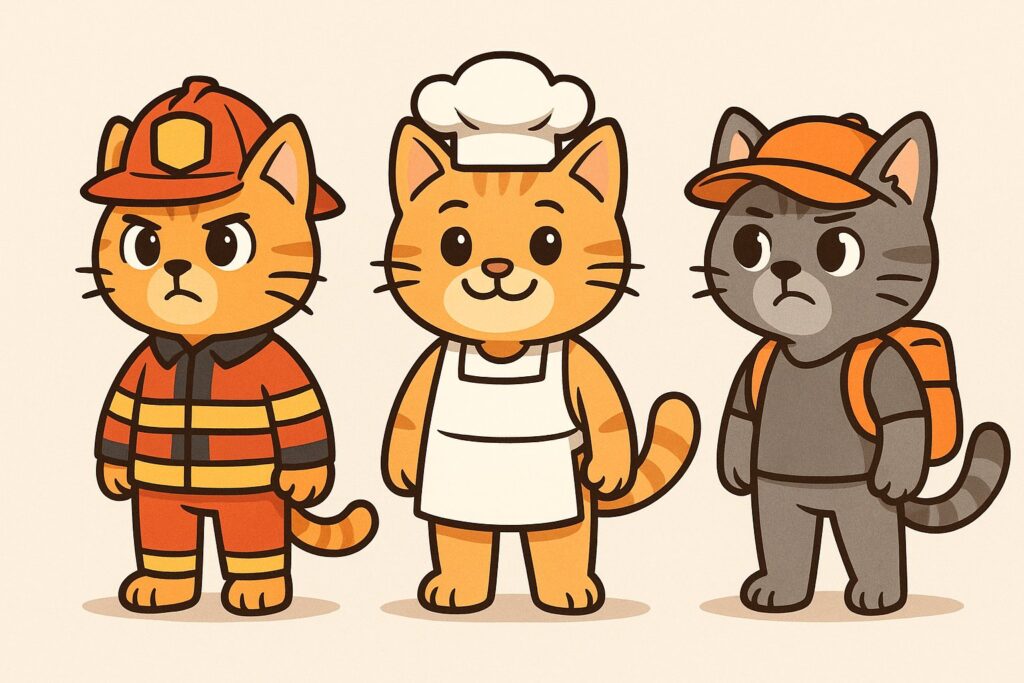
A firefighter cat without a helmet looks like just a cat. A tiny helmet instantly conveys role and story. Start with clear signals.
2. Scale Accessories to Fit the Character
Oversized props (like a wrench or megaphone) can exaggerate comedic effect. Tiny props (like a mini clipboard) emphasize detail.
3. Match Colors to Emotion or Alignment
Warm colors (red/orange) suggest energy or aggression; cool colors (blue/green) suggest calm or professionalism.
4. Use Hats and Headgear for Instant Role Recognition
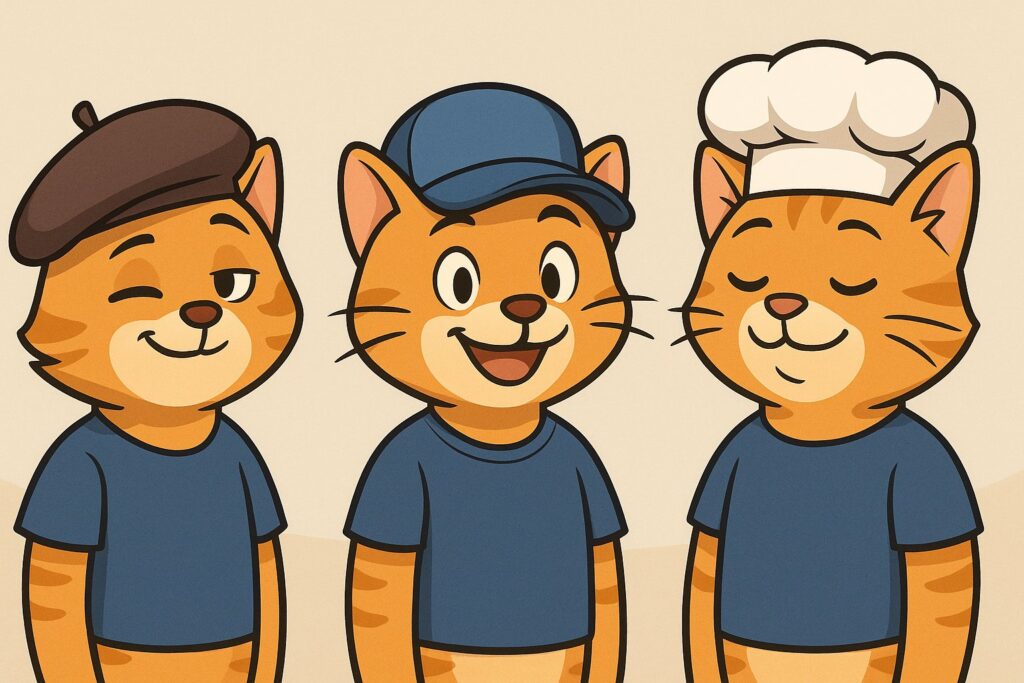
A beret says “artist”, a cap says “worker”, and a chef’s hat says “kitchen chaos.” Hats are shorthand for character types.
5. Don’t Overload with Items
One iconic prop is better than five vague ones. Clarity beats clutter in short-form content.
6. Use Props to Drive the Plot
A firefighter cat dropping a hose, or a cat slipping on a banana peel — props can be story beats.
7. Let the Costume Tell Backstory
A tattered jacket may hint at a stray cat’s rough past; a pristine uniform shows pride and professionalism.
8. Animate Props Where Possible
Even small motion — a swinging bell, a wobbling tray — adds life and humor.
9. Add Personal Touches
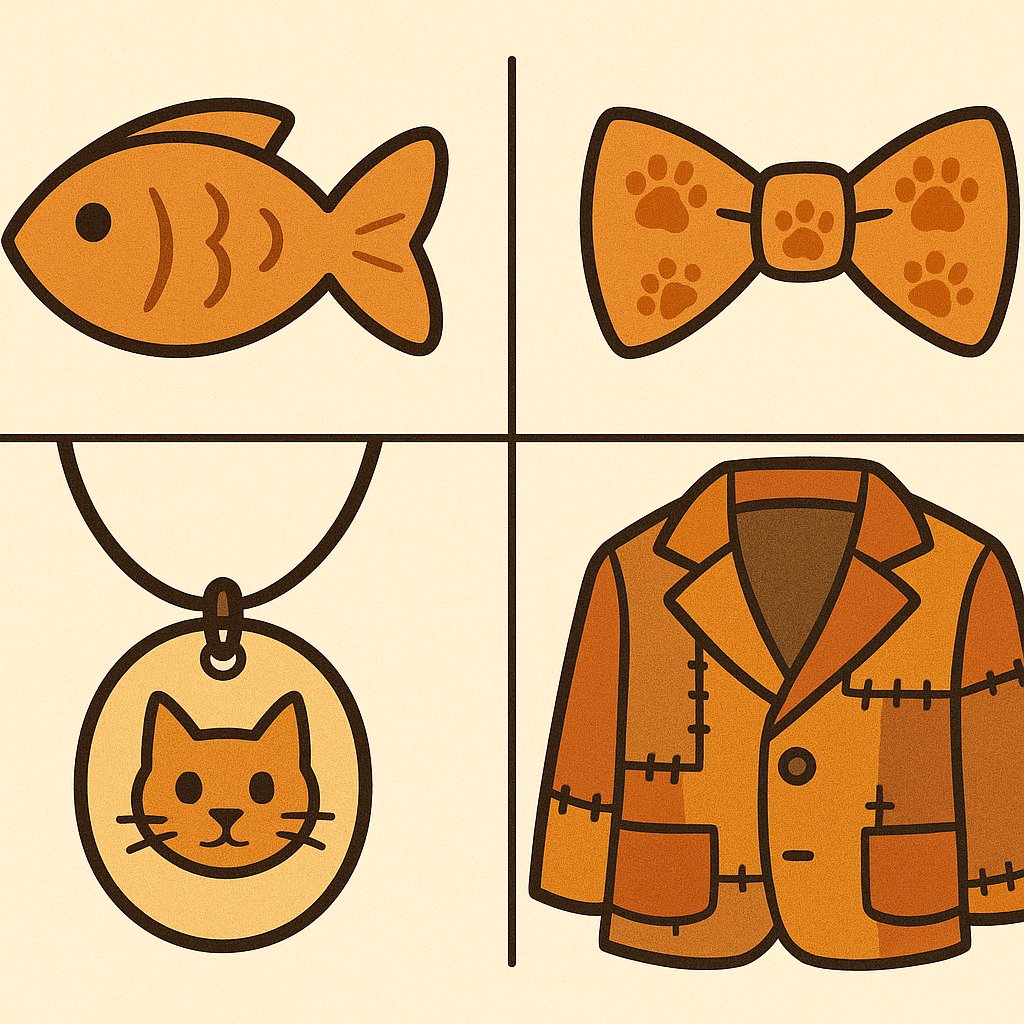
A patch with a fish logo, a bowtie with paw prints — small details create memorable characters.
10. Keep It Consistent
Once you choose an outfit and prop combo, maintain it across scenes unless the story calls for a change. Continuity boosts viewer retention.
📚 Summary
Costumes and props aren’t just decoration — they’re narrative tools. They help viewers instantly understand who your character is, what they want, and how they fit into the story. Use them intentionally and creatively to maximize impact in short-form video storytelling.
🔗 What’s Next?
Ready to explore how facial expressions can drive emotion and timing in your scenes?
👉 Next: Facial Expressions and Reactions